By Lisa Rowell
June is Men’s Health Awareness Month, a reminder for men to be proactive about their health.
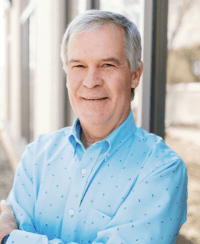
What better person to interview for this important topic than Dr. Joseph Weigel, a respected internist and dedicated medical educator. A graduate of the University of Louisville School of Medicine,
Dr. Weigel joined Lake Cumberland Medical Associates in 1985. A career-long member of the American College of Physicians, he earned Mastership in 2014.
Dr. Weigel played a key role in launching Lake Cumberland Regional Hospital’s Residency Program and has taught students from across Kentucky, serving as the program’s internal medicine director, which he will be stepping down from at the end of June. His community contributions include helping implement a smoke-free ordinance in Somerset, ensuring AED access in all Pulaski County schools, and founding the Lake Cumberland Runners.
Dr. Weigel was recently honored with the Dr. Hossein Fallahzadeh Public Health Hero Award for his decades of leadership, service, and public health advocacy.

What shouldn’t be neglected
When it comes to what men need to hear about their health and what gets overlooked or neglected, Dr. Weigel says men are generally less attentive to their overall physical and mental health than women are.
“They tend to neglect themselves until something happens. The analogy I give to people is that you do routine maintenance on your automobile and you expect to suffer consequences if you don’t. Some of it has to do with inconvenience, some of it has to do with fear, some of it has to do with poor insurability and out of pocket expenses,” he explained.
A 2022 Cleveland Clinic survey estimated that roughly 55 percent of men do not get regular health screenings.
“One thing I’ve learned over practicing medicine for 40 years is that truly an ounce of prevention is worth a pound of cure and it doesn’t take very much to do simple prevention,” Dr. Weigel stressed.
He said males over the age of 16-18 should maintain a reasonable body weight, and avoid tobacco products and alcohol.

Stay Active
Dr. Weigel recommends men maintain a reasonable level of fitness. “The national recommendations are pretty straightforward,” he said, adding that it’s 150 minutes a week of moderate exercise, which works out to 30 minutes a day, five days a week. “Most people, regardless of what statistics say, don’t do it,” he said. Walking, moderate gardening or yard work could be considered exercise. In a society where many could consider exercise an unpleasant word, Dr. Weigel describes it as keeping a body that was designed to be active, staying active.
We live in a society that, for the most part, performs sedentary work. “Probably nothing is more risk-laden for them and for their general health than that level of inactivity,” Dr. Weigel stated. He said it’s been proven how lethal it is for people to sit too much during the day.
Dr. Weigel stressed that moderate strength training is important along with pliability and mobility to ensure your joints and muscles move the way they’re supposed to.
Steady on your feet
As people age, optimal health also has to do with balance, he explained. He said falling is not a normal part of aging and that shouldn’t be happening to you as you age.
Falls are a major public health concern among older adults. According to the Centers for Disease Control and Prevention (CDC), more than one in four adults aged 65 and older experiences a fall each year, making falls the leading cause of both fatal and nonfatal injuries in this age group. Men face a significantly higher risk of dying from fall-related injuries.
Dr. Weigel is also adamant about buckling up in the car. Seat belts are crucial safety devices that significantly reduce the risk of injury or death in car crashes.
Ounce of prevention
Dr. Weigel recommends getting age- or risk-appropriate cancer screenings; knowing your blood pressure from a young age and paying attention to it regularly through adulthood; and knowing what your blood sugar is from the time you are in your twenties, especially if you are heavy.
Your primary care provider will want to know what your lipid levels look like to assess your overall health and risk for cardiovascular disease.
Dr. Weigel stressed that these are all reasonable and inexpensive measures that can help avoid many of the issues doctors deal with in the office and in the hospital all the time.
“Most people in contemporary America are not fit and not only are they not trying to prevent illness, most of them are actively pursuing illness. By that I mean they smoke, they over-drink, they use substances that they shouldn’t be using in any of a number of ways, either orally or intravenously. So most of the disease that we deal with inside the hospital has to do with things that should never happen at all. They are diseases that are caused by what I’ve tried to teach for years are bad behavior, and that is the hallmark of most of American chronic illness.”
Tobacco
Kentucky’s adult smoking rate is higher than the national average, and vaping is common among teens.
“It is a horrible physiologic addiction and it’s a bad, bad, bad habit,” Dr. Weigel stressed about tobacco use, adding that it’s very difficult for people to stop, especially when they started at a young age. He said it’s common for people to start smoking before the age of 18.
When it comes to vaping, Dr. Weigel said young people should never start the habit, but it can be a conduit to wean lifelong smokers off tobacco. “Nicotine dependence is never something that you want to develop.” If you’re trying to stop any type of addiction, talk with your primary care provider to discuss ways that are appropriate for you to kick the habit.
Signs and symptoms
Dr. Weigel advises not ignoring abnormalities on your skin that do not go away or are not healing. He recommends adequate sun protection. “Bleeding you see from an orifice is almost always significantly abnormal. It should not be ignored and should be brought to somebody’s attention.” He said to be alert to anything with your body that isn’t working the way you know it should.
Signs such as difficulty urinating in men can signify prostate problems. Combined with other symptoms that can develop, he said that although not necessarily life-threatening, shouldn’t be ignored.
Good habits
In addition to the healthy habits mentioned previously, Dr. Weigel recommends getting adequate sleep on a regular basis and also not taking any medications you do not understand — especially not taking those prescribed to someone else. He advises making certain you are aware of what you are taking and the potential risk for harm.
What Dr. Weigel said he feels is the most important habit to have for optimal health is to have a primary care clinician who is responsible for you. He said to get established by visiting at least once then follow a regimen recommended by that clinician. “Certainly by the age of 40, make absolute certain that somebody knows who you are, that somebody knows what your numbers look like, and that you are practicing habits that are conducive to prevention.”
Residency programs
Dr. Weigel doesn’t want anyone to be fearful of becoming established with a clinician. “One of the reasons we established the residency programs here is to try to produce new clinicians both in the hospital and in the clinic who are available for people who have trouble getting somebody to take care of them. Probably the easiest way to establish care is through the residency clinic here.” He said they are trying to turn out kind, caring and compassionate clinicians. The clinics offer a way for people to access primary care that they might not be able to otherwise.
What brought the residency idea to fruition was the desire to produce clinicians who trained here and wanted to stay around here. Dr. Weigel said the data overwhelmingly shows more than 50 percent of all people who train in a specific geographic location within the United States end up living and practicing within 50 miles of that place. He credits former LCRH CEO Mark Brenzel with bringing the residency idea to the area fifteen years ago. They accepted their first group of residents in 2014.
“As a general rule, people who live in communities this size and smaller have been underserved for a long period of time,” Dr. Weigel explained.
Transitions, observations, and a last bit of advice
As Dr. Weigel transitions from serving as the program director for the internal medicine residency program, he said he’ll place more of his focus on teaching the students.
In terms of what has changed the most over his career, he said, “I don’t think the way you relate to human beings has changed very much at all.”
He feels one of the biggest changes, is the transition to electronic medical records. “While there are many things that are very positive about electronic records and the information that they can store, it also consumes an enormous amount of the practitioner’s time that didn’t used to be.”
Another change is the separating of outpatient and inpatient care into two different spheres has also been a transition that Dr. Weigel says can cause confusion for patients, especially the elderly.
From a treatment point of view, Dr. Weigel said, “Certainly medicine is aggressively moving ahead. Scientifically, the way something as straightforward as a heart attack was treated when I first started practice in 1985 here, and the way that it’s treated today in 2025, is as different as night and day. So that process has evolved dramatically for the better.” The development of pharmaceutical interventions over the last 40 years is another notable change Dr. Weigel said he has observed over the course of his career.
“There’s no question that the science of medicine has continued to evolve and has continued to get better,” Dr. Weigel noted. “It’s a matter now of really doing the small things right and then making certain that care is accessible to everybody and not just people who have resources.”
“There’s no question it’s bad to be sick. It’s bad to be poor. But it’s especially bad to be both poor and sick,” Dr. Weigel said. “That’s one of the best things about the residency clinic is that there really is no barrier there for people to be seen despite their socioeconomic circumstances.”
In his 40 years of practice, Dr. Weigel said the questions have largely remained the same, while the answers have constantly changed. His advice for young physicians going into practice? “In order to stay good in what you do, you have to be curious and you have to be constant.”

 Compass Communications