Why you should make the switch to native plants in your home landscape
With Melanie Lawless
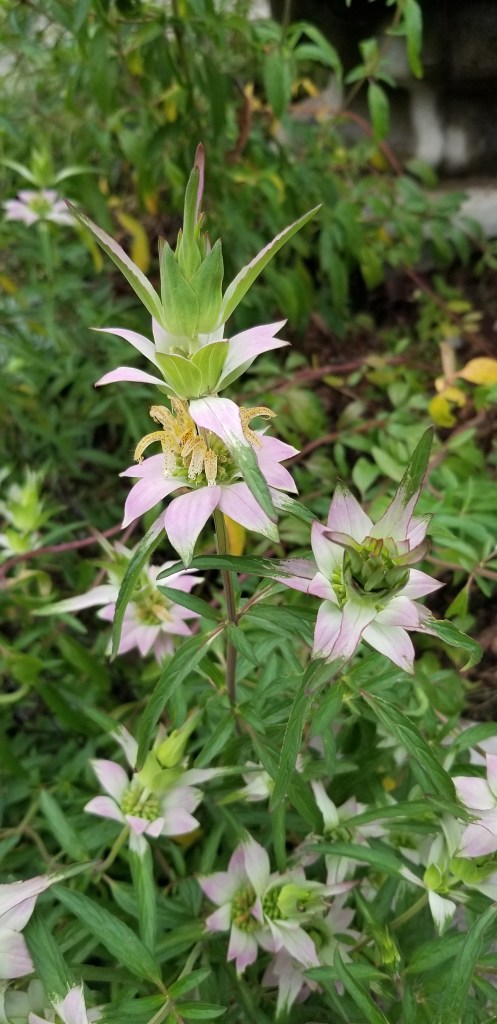
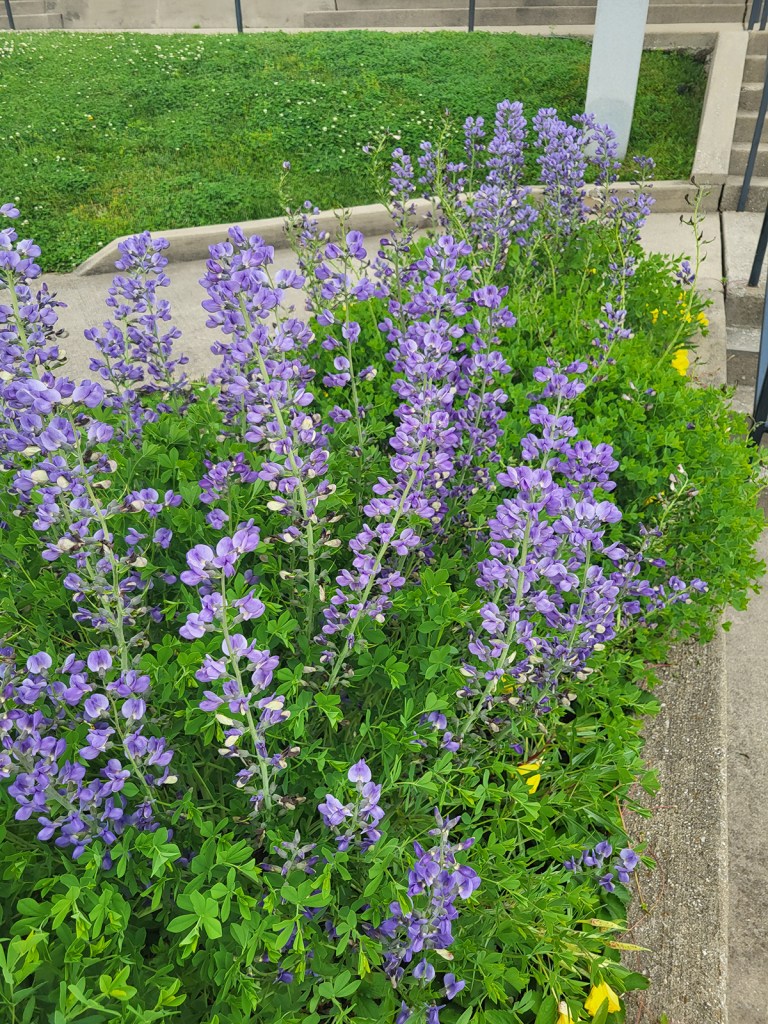
If you’ve been downtown at the corner of East Oak and North Central, or by the Subway at U.S. 27 and Ogden, or by the First United Methodist Church, or the piano park on College, or even if you’ve seen the center median at Pulaski County Park, you may have noticed landscaped areas filled with native plants.
Those spaces are the passion of local master gardener Melanie Lawless, who oversees their care and maintenance. Equipped with the tools of her trade, and a handful of plant-loving helpers from the city, Melanie’s love of plants — and native Kentucky plants in particular — is evident in the care and year-round beauty of the city garden spaces.
Melanie said Brian Gurley, who works for the City of Somerset, was instrumental and supportive in helping to redo the Subway lot and the Oak Street lot. Somerset Garden Club members, including Marc Carter, were also instrumental in getting the Oak Street lot filled with native plants, which Marc maintained for several years.
Melanie has been working with native plants for about a decade now and was inspired by Douglas W. Tallamy’s books, Bringing Nature Home, and Nature’s Best Hope.
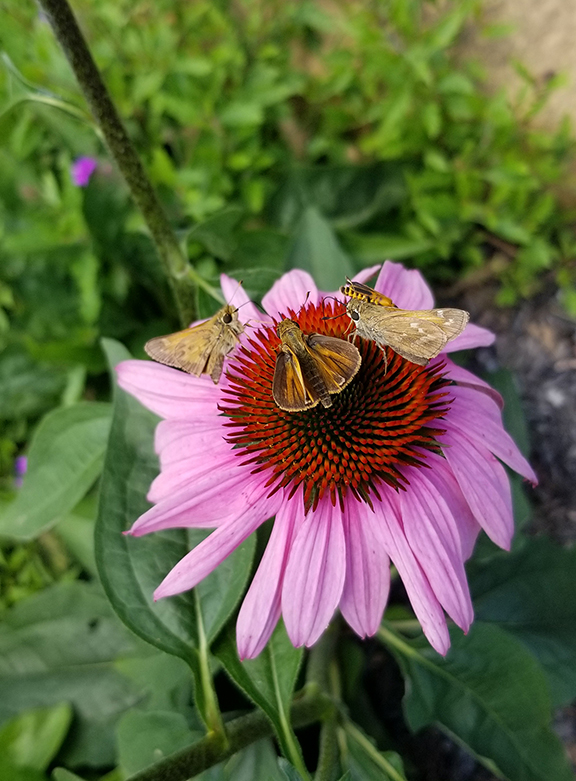
From the plants themselves, to the insects that eat the plants or take shelter in them, to the birds that eat the insects, there’s a rhyme and reason to the biodiversity of natives in our yards and gardens. By starting locally and redesigning suburbia, as Tallamy suggests, and taking notice of the studies of energy moving through our food webs, you’ll see why Melanie is so passionate about bringing native Kentucky plants to our city’s garden spaces.
If you will give her a moment, Melanie will explain the differences in native plants, what appear to be (but are not) natives, and what are referred to as “cultivars” or man made variations.
See the sidebar at the end of her article (extracted from her Powerpoint presentation) to find out more about native plants, including where you can get some for your yard!
Be Different
Native plants have become more popular in the last few years. But what exactly is a native and what role do they play in an ecosystem now more dominated by exotic plants? And why should we care? I hope to inspire you to care what plants you put into your landscape, to choose those plants wisely, and to not settle for less.
Why grow/plant native plants?
Native plants have formed a symbiotic relationship with native wildlife over thousands of years, and therefore offer the most sustainable habitat.
A plant is considered native if it has occurred naturally in a particular region, ecosystem, or habitat without human introduction.
Native plants will thrive in the soils, moisture, and weather of their native region. That means less watering and no fertilizing or chemical application ever.
Native plants assist in rainwater runoff and in maintaining healthy soils. Their root systems are deep and keep soil from becoming compacted.
Nativars: what are they and where do they fit in?
A native plant is one belonging to a species that was present in our ecosystem prior to European settlement. These plants have held an ecological niche for centuries and reproduce, primarily, through open pollination. This is a straight species and what we are planting today in the community spaces.
A cultivar is any plant that is developed or selected for its desirable characteristics. Cultivars are sometimes reproduced through cloning methods. A “nativar” is a cultivar that came from a straight-species native plant.
How to identify nativars
Nativars can be identified by checking for a variety name in addition to the species name on the label of the plant.
For example, Brandywine Red Maple, Acer rubrum “Brandywine,” is a cultivar, whereas the native, from which it is derived, would simply be labeled as Red Maple, Acer rubrum.
Natives vs. nativars
Native plants grown from seed carry the wealth of their native gene pool. They perpetuate this diversity as they grow and participate in successful pollination. This genetic diversity helps whole species to survive and adapt when confronted by environmental stress. Each successive generation of plants reproducing in this manner continues to maintain a rich heritage.
Nativars are sometimes propagated by cloning, so that each plant has the same genetic makeup as the parent plant.
If only a small percentage of the plants being planted in landscapes are nativars there would be no need for concern. But the mass-production and increased use of nativars over straight species native plants is a concern. Simply put, we don’t know what impact the overuse of nativars will have on our ecosystem. And there is a real risk of genetically polluting straight species native plants.
What can we do?
Straight species, open-pollinated plants, and the genetic diversity they contain, are the foundation of both nature and horticulture.
Consider buying straight species native plants from native plant nurseries when you can, which are almost exclusively grown from seed! You can save your seed from your native plants and grow your own!

Birds and bees and insects
Ninety-six percent of all terrestrial bird species feed their young insects. The chickadee needs to hunt between 350-570 caterpillars every day for 16 days to feed its young. It hunts within a 50-yard radius of its nest.
That’s between 6,000 and 9,000 caterpillars needed to feed the young of each “clutch” of birds!
Insects are also the sole food source for other birds, bats, amphibians, reptiles, spiders, and mammals like opossums.
Twenty-three percent of a black bear’s diet is insects.
Insects are under-appreciated for their role in the food web!
Ninety percent of insects are specialists, consuming only native plants. The reason is insects and native plants have co-evolved together.
It takes a long evolutionary time span rather than short ecological periods for insects to adapt to the specific chemical mix that characterizes different plants.
All plants have chemical defenses that prevent insects from eating them. Our native insects have had enough time to overcome these chemical defenses to be able to eat native plants.
Introduced or non-native plants often have different chemical defenses than our native insects have encountered, making the plants difficult for them to consume.
Monarch caterpillars can only eat native milkweeds. No milkweeds means no Monarchs. Don’t be tempted to cut back your Milkweed when it starts to look tattered, as it likely contains Monarch eggs.
Bees are picky eaters, too. Indigenous bees are four times more likely to use native plants for nectar than non-native plants.
Why use native plants?
Plants at the bottom of the food chain convert the energy of the sun into biomass which feeds insects. Ninety percent of insects can only eat native plants. Ninety-six percent of birds need insects to feed their young.
So, if you have a landscape without native plants, you’re going to have fewer insects, fewer birds, fewer amphibians, and this cascades up the food chain.
Native plants are low maintenance, they’re beautiful, they provide healthier places for people, they help the climate, and conserve water and wildlife.
Non-natives
Non-native plants are pretty, but they don’t provide the ecological benefits that straight species native plants do. These plants are mostly from other continents and have chemical defenses that our insects cannot eat. They frequently turn out to be invasive.
If your nursery doesn’t carry straight species native plants, ask them to start.
NATIVE PLANT & SEED SOURCES
Joy of Natives Native plant nursery and wildflower Farm — Nancy, Ky., plants only; Joyofnatives@gmail.com; 606-305-0316 Melanie
Ironweed Native Plant Nursery — Columbia, Ky., plants only; Ironweednursery.com
Dropseed Nursery — Goshen, Ky., plants and seeds; dropseednursery.com
Roundstone Seed — Upton, Ky., seeds only
Missouri Wildflower Nursery — catalog, seeds and plants; Mowildflowers.net
Prairie Nursery — catalog, prairienursery.com
Prairie Moon Nursery — catalog, seeds and plants; prairiemoon.com
About Joy of Natives
We are women who are passionate about growing native plants. Our goal is to make Kentucky native plants accessible to gardeners in our area. Our plants are predominantly seed–grown, and many come from local seed stock. You will not find cultivars of our beloved Kentucky natives. Genetic diversity is behind this decision so our plants will be more resilient. This quote from Lady Bird Johnson encompasses how we feel about indigenous plants:
“For me, wildflowers are joy-giving. They have enriched my life and fed my soul and given beautiful memories to sustain me.”
 Compass Communications