Story and photos by Lisa Rowell
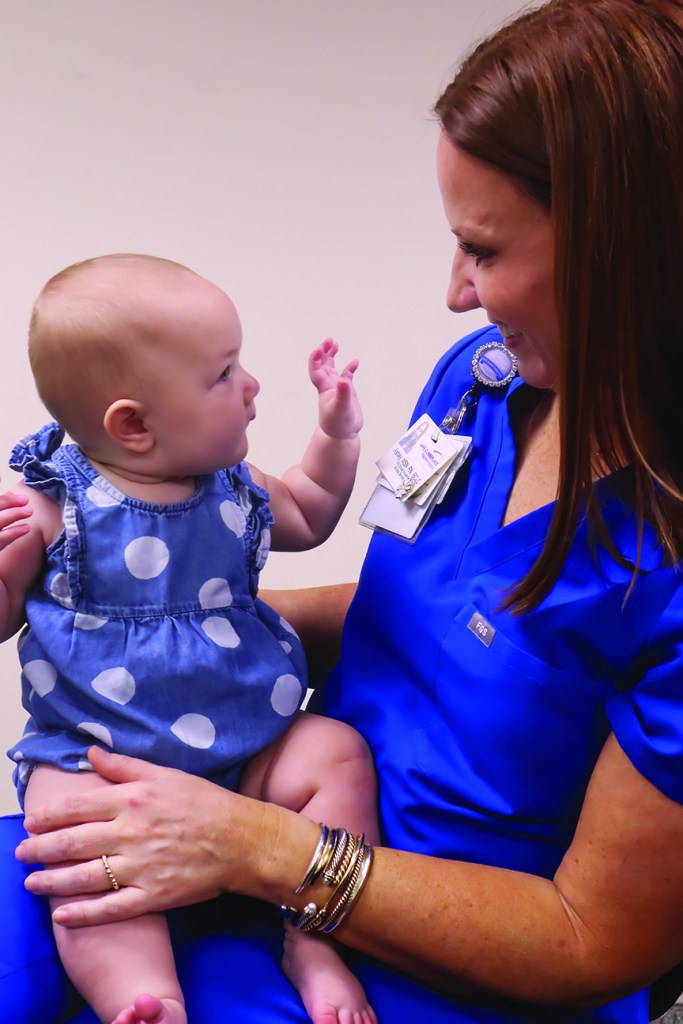
Ashley Hoseclaw, MSN, RN, IBCLC, is a lactation consultant and registered nurse at Lake Cumberland Regional Hospital. In her more than two decades of supporting new mothers in their quest to understand breastfeeding, she has seen a lot of gadgets and trends, and has heard all the changing advice when it comes to how mothers feed their babies. The one thing that hasn’t changed, is their determination to make it work.
To decode all those letters after Ashley’s name — she earned her master of science in nursing (MSN), and is an International Board Certified Lactation Consultant (IBCLC).
The birth of an idea
Dr. Alecia Fields, an OB-GYN physician, suggested starting a lactation support group. With the help of former medical student Megan Carugati, who has since moved on to her residency, they formed the group. Ashley said that although the group was modeled after some similar national groups, it’s uniquely their own. “That way, we were free to do what we wanted,” she said.
The program started in January of this year, with about eight to ten mothers attending. They see upwards of 13 at any given meeting.
The hospital, which sponsors the group, posts the meeting dates and locations on its Facebook page, as locations can vary. They often will meet at the library.

Ashley said it’s not a clinical group, so meeting off-site works by providing a comfortable atmosphere where moms can bring the kids in a more relaxed environment for informal dialogue between them.
One such mom, Brittany Prater, had all three of her babies at LCRH. She said the support group in our area was long overdue. As most mothers will admit, emerging technology coupled with advice about childbirth and feeding newborns can be confusing and daunting.
“My first child is ten. There were eight years when I wasn’t having babies,” Brittany said. When she had Jett, who is now two, she said there was a lactation consultant in the area but she had unanswered questions. She knew she wanted to breastfeed but wasn’t aware of all the benefits and whether or not it was going to be the right choice for her and her then-newborn. “I felt like there was not enough advocation for breastfeeding,” she said.
As an exhausted new (again) mom, easy access to formula at-the-ready might have swayed her decision to give breastfeeding a solid try.
Ashley said, “If a mom comes in and says she plans to breastfeed or breast and formula feed, we do not take formula into the room.”
It opens an educational opportunity if the mother has trepidation about her choice to breastfeed. Ashley said a new mother might have anxiety over whether she has enough milk for her baby. She explained that babies typically do what’s called “cluster feeding” as newborns, which helps bring the milk in. “Cluster feeding is when they’re feeding off and on over several hours. They may breastfeed for 30 minutes, then they’re off for 30 minutes, then they’re back on again,” Ashley explained.
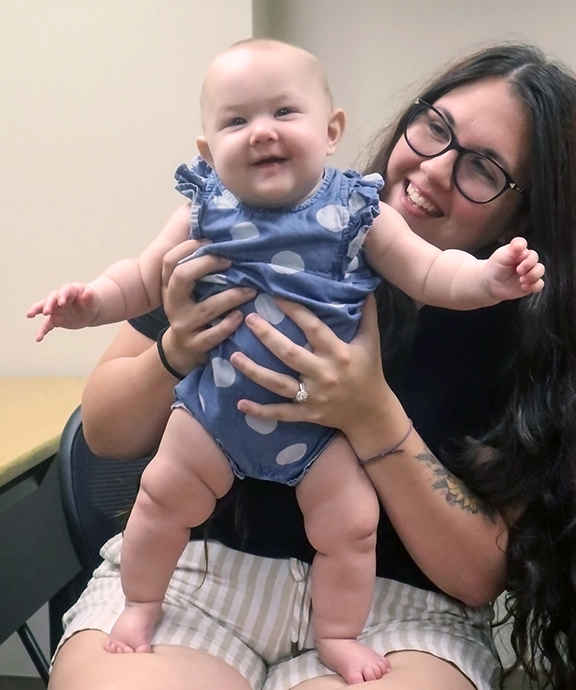
Brittany Prater, with her youngest child, Blaine. For Brittany, breastfeeding her babies was a natural choice. She shares her knowledge and experiences with other mothers through the Latch with Love support group. Founded earlier this year through Lake Cumberland Regional Hospital, Latch with Love is an informal group that meets off campus at various locations. In addition to offering lactation support, the group is also source of moral support for all mothers, regardless of how they choose to feed their babies.
Give it time
It’s easy for a new mother to feel like she’s not doing it right or that she isn’t producing enough for her baby to thrive.
“That’s where people stop,” Brittany said of trying to breastfeed. “When formula is readily available, and your nipples hurt, and the baby is crying, you’re going to grab the formula.”
Without the benefit of the Latch with Love program at the time, Brittany said she was reading and researching everything she could find about breastfeeding while prepping the nursery for baby Jett’s arrival.
“It’s hard in the beginning. It gets so much easier,” she said as she bounced six-month old Blaine on her knee. She said if there had been an extra push or education at the time, it would have reassured her.
“It’s actually easier than formula feeding because you ARE the milk,” Brittany said about breastfeeding. “It’s less things that I have to take out of the house. I usually carry a clutch that has wipes and diapers, and that’s it, because I don’t need anything else.”
Ashley said breastfeeding can be tough in the first couple of weeks but you have to trust the process. “You’ll know things are working by the cues from the baby. The hands are more relaxed after the feeding. They may still be doing hand-to-mouth motions and smacking of the lips because that’s normal baby behavior but they are not going to have fists.” she explained. “Their bodies don’t feel tense, they’re more relaxed. Your breasts will feel full before a feeding and will feel a little softer after. The baby is happy and having wet and dirty diapers, they’re gaining weight when you go for your well baby checks.”
No judgment
Brittany stressed that there is no judgment from the support group when it comes to how any mother chooses to feed her baby, whether it’s breast feeding, formula feeding, or a combination. Each family has their own needs and the members of the group respect that.
Brittany and Ashley agreed the Latch with Love group is there for support for mothers with babies of any age, or who may be expecting, or thinking about expecting, no matter how they choose to feed their babies.
Ashley said the informal setting opens up comfortable and easy dialogue that might include mothers talking about which pumps work best for them, or where to obtain certain supplies.
Brittany said it’s the little tips and tricks the mothers share that make a difference. “Those are the things that help get us through,” she said.
To pump or not to pump
Brittany said it can be confusing to look at all the controls on a breast pump and understand which button to press. That’s where the sage advice from the group can make a big impact and take some of the mystery out of the process.
Ashley said there are many reasons why a new mom may choose to pump out of necessity, such as school or work. “If you’re going to be separated from your baby for whatever reason, you are going to need to be able to utilize a pump.”
“What’s going to keep the breastfeeding relationship going is breastfeeding directly when you’re together, and when you’re apart, replacing those feedings you’re missing with a pumping session,” Ashley explained.
She cautioned that if a mother is strictly pumping and bottle feeding, the pump does not get the same amount of milk out that a baby naturally does.
“A pump is not a great indicator of how much you are producing,” she said. “Especially in the early days, the colostrum — the precursor to milk — is thick and it’s sticky, and a pump doesn’t get it out well. Even later when the milk is more watery and it’s easier to get out, you have no emotional attachment to a hunk of plastic, whereas when your baby latches on, it’s natural and you don’t even have to think about it. Those hormones work the way they’re suppose to. So moms that exclusively pump typically tend not to breast feed as long because their supply is not as great.”
Brittany said everybody responds to pumps differently. Brittany and Ashley agreed that choosing a pump is a matter of preference.
These are the kinds of topics the mothers discuss at the Latch with Love group meetings, along with just checking in with each other.
The power of community
Ashley said another reason the group is so beneficial is listening to a mom like Brittany communicating what she went through and how she educated herself. “There’s a lot of value in words from a peer rather than a professional,” she said.
Sometimes the group will casually discuss clothing that is made specifically for breastfeeding. She said the stigma of generations ago that expected breastfeeding mothers to use a cover is going by the wayside. “I love this generation’s push for breastfeeding. I will tell you — a baby this active — you can forget a nursing cover. We don’t have a nursing cover at home. I love the direction it’s going because it’s making a lot more moms comfortable,” said Brittany.
Ashley agreed. “This is normal. This is how it should be. This is how it should have been from the beginning. It’s on trend to breast feed now. That is the healthiest trend I’ve seen.”
“A lot of moms are doing great,” Ashley encouraged. “They come to meet like-minded mommas, to have community, or social time.” She said it’s a place for interested moms or those who feel challenged, or who want to share their experiences. “It’s whatever the reason may be to get the information to make that breastfeeding journey happen.”
Brittany said, “It’s camaraderie and togetherness. Let’s just be moms in this season of life together.”
Ashley said participating in the group is a social thing and you can just so happen to learn something while you’re there, or connect with another mom. “You don’t have to have a problem to come. It’s just that community, it’s that support of other mommas.”
Brittany added that it’s a safe space for moms to just check in with one another.
Ashley encourages anyone who is interested to attend their next group meeting. They may have a guest speaker, a craft project, giveaways or door prizes, resources, and information. Keep an eye on the hospital’s Facebook page: facebook.com/LakeCumberlandHospital.
 Compass Communications