There are a variety of tick species in Kentucky and several illnesses their human (and animal) hosts can develop when bitten by them. The following is an outline of the variety of ticks found in our region and what possible diseases they could potentially transmit.
Identification
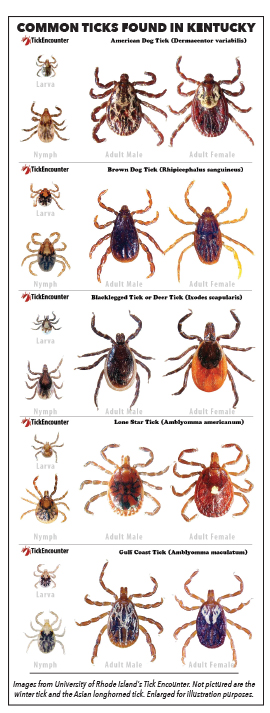
According to Tick Spotters, “Knowing the type of tick, the likely tick infection rate in the region, and how long the tick was attached and feeding are all critical details for making tick bite management decisions; like whether to have your tick tested or seek disease-preventive treatment.”
American Dog Tick — Also known as the wood tick, the American dog tick is common in Kentucky. It can transmit several diseases to humans, pets, livestock, and wild animals, including: Rocky Mountain spotted fever, tularemia, and canine tick paralysis.
Brown Dog Tick — Unlike other ticks, the brown dog tick can survive its entire life indoors, Diseases it can transmit include Rocky Mountain spotted fever.
Black Legged Tick — Also known as the deer tick, diseases associated with this tick can include: anaplasmosis, babesiosis, ehrlichiosis, Lyme disease, borrelia miyamotoi disease (a.k.a. hard tick relapsing fever), and Powassan virus disease.
Lone Star Tick — According to the University of Kentucky, lone star ticks are “active questers,” meaning they will chase their host. This species is very common in Kentucky and is often present in large numbers.
A bite from a lone star tick can spread a variety of diseases including: ehrlichiosis, tularemia, alpha-gal syndrome (also known as alpha-gal allergy or mammalian meat allergy), Heartland virus, southern tick-associated rash illness (STARI), bourbon virus disease, and Rocky Mountain spotted fever.
Gulf Coast Tick — This tick can be active in temperatures as low as 39°F and can transmit pathogens to humans, pets, livestock, and wild animals. These can include diseases similar to Rocky Mountain spotted fever, and Heartland virus.
Winter Tick — This tick is not known to carry diseases that can be transmitted to humans or their pets.
Asian Longhorned Tick — Bites from this tick in Kentucky tend to be associated with cattle, though there are reports from bear, elk, and humans as well, according to the University of Kentucky. The invasive species has been found in at least ten Kentucky counties since first being identified in the U.S. in 2013. Although there are no reported cases in the U.S., the longhorned tick is known to transmit diseases in other countries.
Protection from tick bites
The Entomology Department at the University of Kentucky says several factors have increased the potential for tick encounters. These can include increases in wildlife populations, expanded ranges of some tick species, development of housing in rural areas, and the popularity of hiking and ecotourism. Awareness and use of preventive measures are keys to reducing tick bites.
The department recommends using repellents and checking yourself frequently for ticks while and after being in areas where they may be active.
They further suggest the best strategy to reduce the potential of contracting tick-borne diseases is to avoid tick bites. These measures can include:
• Avoid walking through uncut fields, brush and other areas likely to harbor ticks. Walk in the center of mowed trails to avoid brushing up against vegetation.
• Use a repellent that contains 20 to 30 percent DEET on exposed skin. Always follow product instructions.
• Use products that contain permethrin to treat clothing and gear, such as boots, pants (especially the cuffs), socks and tents.
• Tuck long pants into your socks and boots. Wearing light-colored pants makes ticks easier to see.
• In areas where there are ticks, check yourself, children and other family members for ticks every 2 to 3 hours and upon returning home from hikes and outdoor activities. Examine behind ears, hair, neck, legs and around the waist.
• If you let your pets outdoors, check them often for ticks. Ticks can “hitch a ride” on your pets, but fall off in your home before they feed. Tick collars, sprays, shampoos, or monthly “top spot” medications help protect against ticks.
How to safely remove a tick
The Kentucky Department of Health says removing a tick quickly can reduce the risk of contracting a tick-borne disease.
Step 1: Use fine-tipped tweezers to grasp the tick as close to the skin’s surface as possible. the goal is to remove the entire tick including its head and mouth.
Step 2: Pull up with steady, even pressure. Do not twist or jerk the tick.
Step 3: Clean the bite area and your hands with rubbing alcohol, an iodine soap, or soap and water.
You can store removed ticks in a sealed plastic bag with the date and location noted. Identification of ticks is available through your local Cooperative Extension Service office.
Anyone with concerns about exposure to ticks and possible disease transmission should consult their primary care provider to determine the best course of action. Most tick-borne diseases can be averted by early intervention with an antibiotic.
Information from the Kentucky Department of Health website and the University of Kentucky Entomology Department. Images from Tick Encounter from University of Rhode Island.
 Compass Communications