Story and photos by Lisa Rowell
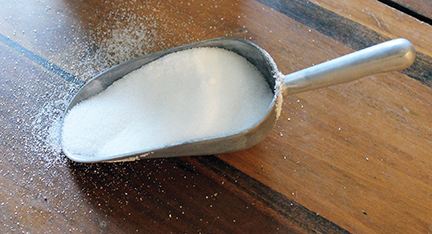
Sugar. We crave it. We love it. We consume way too much of it. Varying studies show Americans consume, on average, roughly 66 pounds of sugar a year!
Last year, the World Health Organization (WHO) recommended reducing our daily intake of “free” sugars to less than 10 percent of our total energy intake for average adults. The American Heart Association says no more than about six teaspoons (25 grams) of added sugars a day for women and nine (38 grams) for men.
Have a plain cake donut with breakfast (12 grams), a soft drink at lunch (39 grams), a candy bar in the afternoon (35 grams), and it becomes easy to see how the sugar adds up.
Wait a second… FREE sugars? ADDED sugars?

In a nutshell, foods we consume are comprised of carbohydrates, proteins, fats, fiber, and water. These are “macronutrients.” Sugars are a type of carbohydrate, which our bodies break down into glucose to be used as a source of energy for our cells and organs.
Fruits and vegetables we eat contain naturally occurring sugars. They are also full of fiber, water and healthful nutrients. Our bodies break down these types of sugars slowly. The added sugars in many packaged foods can be highly concentrated and stripped of any nutrients during processing. Our bodies break those down more quickly. For example, the six grams of sugar in one cup of raw carrots is metabolized differently than the same amount of sugar in just half that morning donut. The sugar in the donut is not naturally occurring, it is added.
Hidden sugars

Understanding the added sugar in our food can be very tricky. Let’s say you do not consume soft drinks, cookies, candy, or other foods obviously packed with added sugars. But you did put ketchup (4 grams of sugar) on your fries at lunch and you ate a cup of yogurt with fruit on the bottom (47 grams of sugar) for breakfast. That’s a lot of extra sugar. Added sugar is hiding in foods we wouldn’t even consider. It’s in breads, salad dressings, soups, pasta sauces, granola bars, and so much more. Those with compromised health issues, like diabetics, must be extra cautious of these hidden sugars and excess carbs.
Food labels can be very misleading. Just because the ingredient list does not include the word “sugar” doesn’t mean it isn’t lurking in the product. The food industry uses more than 60 different names for added sweeteners. Malt syrup, rice syrup, and dextrose are just a few.

Just eat the apple
One apple may contain 19 grams of naturally occurring sugar, but it takes three to four apples to make one 8-ounce glass of apple juice. Food products claiming to be sweetened with fruit juice could contain highly concentrated forms of the fructose from the juice and bear no resemblance to the original fruit. The same applies to sweeteners like high fructose corn syrup.
The biochemistry of these types of sweeteners is not the same as the whole foods we eat. The naturally occurring sweetness of that apple is stripped away along with fiber and nutrients from the original fruit. Our bodies absorb glucose to fuel our cells while pure fructose needs to be processed by our livers. Too much and our livers store the excess as fat. Processed foods can be loaded with fructose.
Just as it is highly unlikely you would eat ten apples in a given day, consuming too much added sugar can take its toll on our bodies.
This brings us back to the recommendations of institutions such as the World Health Organization and the American Heart Association to reduce our added sugar consumption.
More and more studies are proving the health risks of consuming too many simple sugars or refined carbohydrates. It can be harmful to blood sugar control, and has been associated with an increased risk of obesity, heart disease, and even some forms of cancer.
The American Heart Association cautions that foods high in added sugars typically do not have nutrients the body needs and only contain extra calories.
To get the nutrients you need, the AHA recommends eating a diet that’s rich in fruits, vegetables, fiber-rich whole grains, lean meats, fish, poultry and low-fat or fat-free dairy products.
Paying attention to the added sugar in our diets is just one way we can take care of our bodies. Of course, talk with your primary care provider about what is best for you based upon your health conditions. ν
Learn more at https://www.who.int/; or at https://www.heart.org/
61 Names for Sugar
- Agave nectar
- Barbados sugar
- Barley malt
- Barley malt syrup
- Beet sugar
- Brown sugar
- Buttered syrup
- Cane juice
- Cane juice crystals
- Cane sugar
- Caramel
- Carob syrup
- Castor sugar
- Coconut palm sugar
- Coconut sugar
- Confectioner’s sugar
- Corn sweetener
- Corn syrup
- Corn syrup solids
- Date sugar
- Dehydrated cane juice
- Demerara sugar
- Dextrin
- Dextrose
- Evaporated cane juice
- Free-flowing brown sugars
- Fructose
- Fruit juice
- Fruit juice concentrate
- Glucose
- Glucose solids
- Golden sugar
- Golden syrup
- Grape sugar
- HFCS (High Fructose Corn Syrup)
- Honey
- Icing sugar
- Invert sugar
- Malt syrup
- Maltodextrin
- Maltol
- Maltose
- Mannose
- Maple syrup
- Molasses
- Muscovado
- Palm sugar
- Panocha
- Powdered sugar
- Raw sugar
- Refiner’s syrup
- Rice syrup
- Saccharose
- Sorghum Syrup
- Sucrose
- Sugar (granulated)
- Sweet Sorghum
- Syrup
- Treacle
- Turbinado sugar
- Yellow sugar
Learn more at sugarscience.org
 Compass Communications